Tampilkan postingan dengan label vintage. Tampilkan semua postingan

Kamis, 21 Agustus 2014

Knowing When to Let Go: Are Old Bikes Always Worth Rescuing?

Bikes of Westport
Sometimes I think I'm a bad influence. Like, when a friend phones last week, excited by her two-wheeled vintage find. "You'll appreciate this - I think it's a mixte!" She texts over a picture. 

"What do you think?"

"Hmmm…" I reply.

"???"

" Did you buy it already?"

"Yea… why?"

"Fork's bent."

" :((( "

Now, I've owned a bike with a bent fork before - a beautiful vintage Gazelle. It rode great for the 2 years I had it and continues to ride great for the current owner. But in this case, I could tell from the picture that the fork at the very least would need straightening by someone who knew what they were doing. That, plus a few other problems I could readily see, made me think my friend was not equipped to deal with the work required to bring this bike to ridable condition. Sadly, at this point she was already attached to the idea that this specific bicycle was meant for her. So she shlepped it to a bike shop and asked for an estimate. I suspect the 4-figure quote they gave her was only half-serious and mainly meant to discourage her (a topic for another time, this!). But in any case, that was the end of it. Having paid very little for the bike to begin with my friend counted her losses and donated it to a local co-op. 

But we do not always let go so easily. 

At the moment I myself have two old bikes in the garage that are, quite frankly, probably destined to return from whence they came (the skip!)… But I am not quite ready to admit that yet, instead tinkering with them pathetically and agonising over whether to spend money on replacement parts that will probably do no good. 

Rebecca of velovoice recently documented the saga of her Puch swoopy mixte, which, despite her best efforts could not be made fully road-worthy due to a kinked rear stay. The bike was beautiful and unusual, and everything she had been looking for in a vintage machine, which perhaps made her more optimistic about its viability than she otherwise would have been. But after months of trying, she finally admitted defeat, stripping it for parts and throwing away the frame. Hopefully the parts will find a new home some day.

A former blogger I knew back in Massachusetts bought a sweet-looking vintage 3-speed that seemed to be in perfect condition, only to discover hidden problems that made it unridable. She took it to bike mechanics, and when that did not produce satisfactory results she enrolled in workshops to try and fix it herself. By the time she finally gave up, she was frustrated, exhausted, devastated and disillusioned in vintage bikes as a whole - which was the part I found most disappointing. 

It really is possible to find vintage bikes with few to no problems. And even those that start out worse for wear can be a joy to bring back to life. But a vintage bike can also become a white whale. And so it's important to recognise when to let go - when a restoration project is too much to take on, be it in terms of skills, finances, or even emotional investment. My advice when it comes to buying a vintage bike of unknown provenance? Acknowledge the risk. And don't get attached until you have it assessed. It's no fun to get trapped in an obsessive quest to restore the unrestorable. After all, you could be out riding a functional bike instead! 

Senin, 30 Juni 2014

Meditations on Early Ruin

Doing errands in the city today, I spotted a woman rolling what I took to be a pre-1960s loop frame roadster. From my vantage point across the street, the bike had a look about it, suggesting it had known better days: a wobble to the front wheel, a crimp to the rear fender, a lumpiness to the saddle, an orangey aura around the black silhouette suggesting a generous coating of rust, and a general ramshackleness that marked it as a tired, creaky, longsuffering thing. The rod brakes and generator bottle corroborated my impression of its age. By the time I reached the bike, the woman had locked it up to a pole and disappeared into a building. Carefully I approached to examine the decals - or what remained visible of them, as most of the frame's surface was caked in dirt and blighted with all manner of exotic fungal growths. When I finally could make it out, the writing surprised me: Gazelle Toer Populair. At first I thought the owner might have plastered new decals onto an old frame. But identifying features in its construction confirmed that I was looking at a retro, not a vintage bicycle, made, at the earliest, in 2009.

What could account for such exuberant decay in a machine only 5 years of age? I imagined the bike being tossed, as a prank, off the Peace Bridge into the Lough Foyle, where it served as a playground for aquatic life before being fished out by local boys and sold at a car boot sale. I imagined other scenarios, too. But even as I played them out in my mind, I knew the bicycle's real history was nowhere near that exotic. Though this specimen was one of the worst so far, I have met others here with prematurely aged bikes, with bikes in horrendous condition for which they have no particular explanation.

Ireland is a strange, damp place. Vegetation flourishes. Man-made things fall apart. Both can happen with breathtaking speed.

I am slowly renovating the house I live in, which, judging by its condition when I moved in, I had at first thought lay empty for decades. It was in fact last occupied just 3 years ago. In this time span, rot and mold had crept in with methodical determination, while on the outside weeds and stinging nettles the size of trees smothered the once-manicured garden, their roots cracking brick walkways and stone walls. The plastic on the decade-old kitchen counters had softened and browned in the manner of pre-war cellulose nitrate. In the upstairs bedrooms I peeled off decomposing wallpaper I was certain had been put up in the 1950s, to discover children's scribbles behind it with the date 2007. Even the overall age of the house is not what I had first assumed from its look and feel. It was built not in the century before last, but in the 1940s. I wonder now how many other lovely old houses I spot in the area are really fairly new constructions.

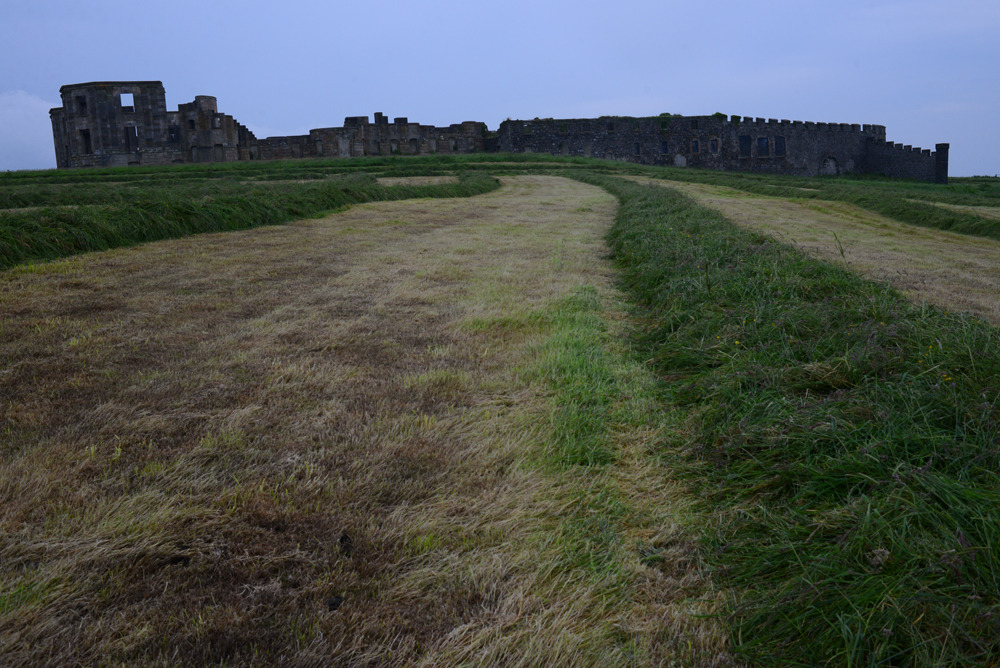
On a cliffside 4 miles down the road stands a North Coast landmark, the enormous skeletal remain of Downhill House. When new to the area and not yet familiar with this structure, I heard locals refer to it as "ancient" as if it were some excavated archaeological site or an early medieval castle. Considering that even from a distance I could spot obvious neoclassical elements, this struck me as unlikely. Still, when I looked it up I did not expect the dates to be as recent as they were: The latest version of the house was built in the 1870s and remained inhabited until after World War II, its trajectory toward disrepair beginning mid-20th century. To think that within that time, the sturdy-looking giant, built no doubt with the finest materials available in its day, became this roofless maze of crumbling stonework - so thoroughly dilapidated that locals (some of whom must surely still remember it intact!), prefer to playfully re-imagine it as an ancient ruin.

There is a trend in some circles of cyclists to celebrate - and even try to hasten - signs of aging on their modern machines. From tattered grips to chipped paint, even spots of rust and tiny dents, such things are cherished as evidence that the bike is authentic and "well loved." This trend can be observed all over contemporary culture, from distressed jeans to the "shabby chic" style of decorating. To a critical theorist, this hunger for decay is symptom of a desire for history in an ahistorical era. But I wonder also whether it is specific to areas where things tend to preserve well - decay requiring either many years or special effort. Here in Ireland, if I want "history" to happen to a modern bike all I need to do is leave it in the garden for a week, then watch it succumb to stunningly early ruin.

Rabu, 25 Juni 2014

Black and White

Two Very Different Takes on Step-Throughs!
42 centimeters, or nearly 17 inches! Any guesses what that figure refers to? Go on, think about it before I tell you. Anyone? 

Over the past few weeks I've had under my guardianship two step-through bicycles that could not be more different from one another: a vintage Claud Butler Lady Lightweight that belongs to a friend, and a modern Mosi Carolina that was sent to me for review by the manufacturer. The former was essentially designed as a time trial bike (according to 1930s notions of what that entails) with all-arounder capability; the latter as a Dutch-style urban commuter. Switching back and forth between these machines has been an interesting experience - especially considering that 42cm is the difference in their handlebar heights! In fact I don't think I've ever ridden a bicycle that's quite as upright as the Mosi or quite as low-leaning as the Claud Butler. And to think that both of them can be described as step-throughs or "lady's bikes" - evoking a similar image while in reality being so different.

And yet, despite these differences what I found most striking about the two bikes was an attribute they had in common, aside from the low step-over: Both felt absolutely amazing to ride. Amazing in an entirely different way form one another, but amazing nonetheless, with each machine's handling feeling "just right" in the context of what that bike was meant to be. This is something not many people think about unless they are involved with product design or product reviews. But it is a core criterion based on which a product can be judged as successful. 

Recently, I was talking to a Belgian acquaintance who owns a shop selling European utility bikes, and who is also a former amateur road and track racer. In his opinion, if a Dutch-style bike feels "too upright" (and size/weight/fit are eliminated as the culprit), it is because there is a flaw in that model's design. A well-designed bicycle of its kind should feel as if it's supposed to be that upright, evoking an "Ooh, this is very different but very nice" type of reaction from even the roadiest of roadies, as opposed to a request to slam the stem. Similarly, a well designed utility bike of this type should not feel slow-rolling in action; subjectively it should feel as if its speed is just right for how fast you want to go while riding in that position. And he applies the same principle to what they refer to in continental Europe as "sports bikes" - that is, road-racing or touring bikes with drop bars. In theory, even to a rider new to the sporty side of cycling, a well designed roadbike should feel intuitive and safe after a minimal initiation period. If it doesn't, something is off. 

For the most part, I think I agree with this way of putting things. Though my own cycling experience so far is limited to just over 5 years, I've crammed a lot of pedaling time and a great number of bikes into those years. I have ridden bikes that did not feel "just right" to start with and so I'd try to wrangle them into being just right with mixed (usually not entirely successful!) results. I have also been lucky enough to ride bikes that have felt exactly right from the get-go. And the thing is, once you've had that experience you know it's possible. You know that not all bikes of the same category, even if they look similar and are similarly priced, are in fact the same in how well they perform the function they were designed to perform. Whether it is a city bike or a racing bike, or something in another category entirely, when a bike feels just right we tend to know it. Sometimes it really is black and white.

Jumat, 20 Juni 2014

Gone Postal

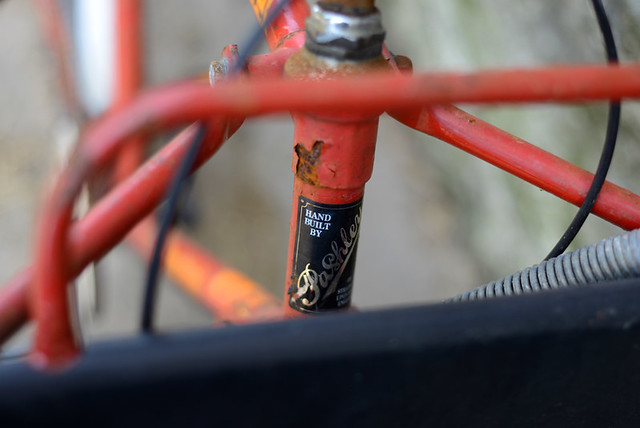
Pashley Postal Bike
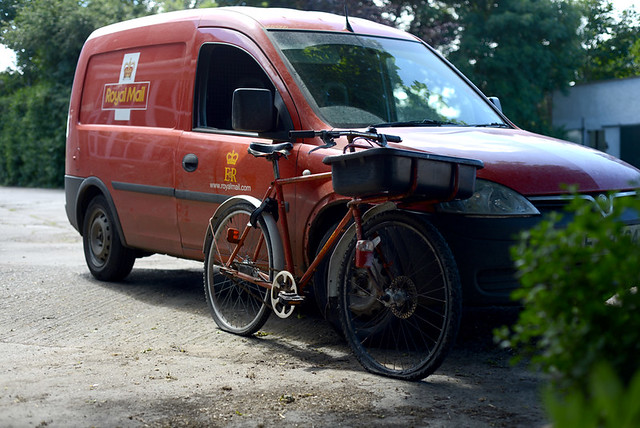
When the postman stopped by with today's mail, I doubt he expected to find a two-wheeled ancestor of his delivery machine in my yard. Yet that is exactly what happened.

"Ever ridden one of these?" I asked.
He shook his head vigorously. "How old is this thing anyway?" 

Pashley Postal Bike
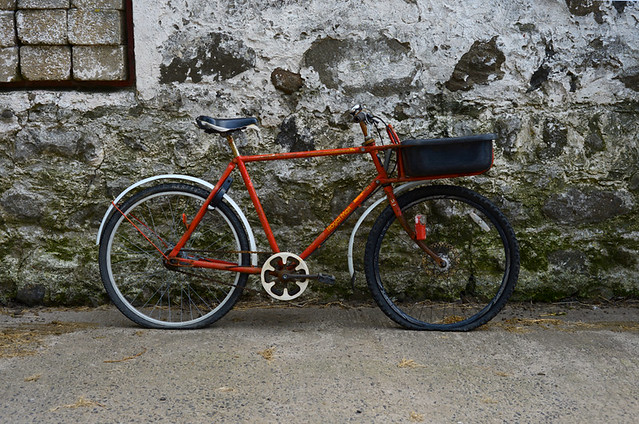
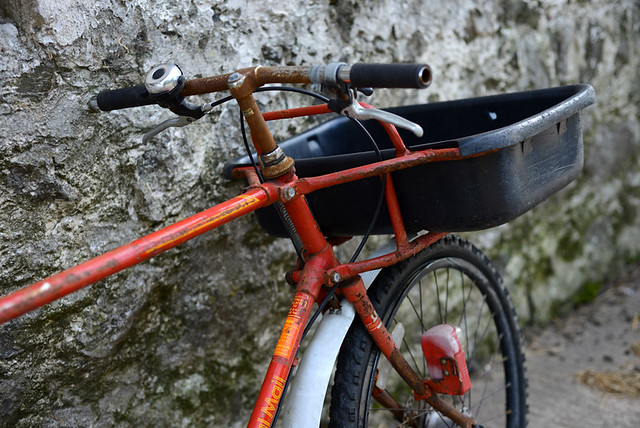
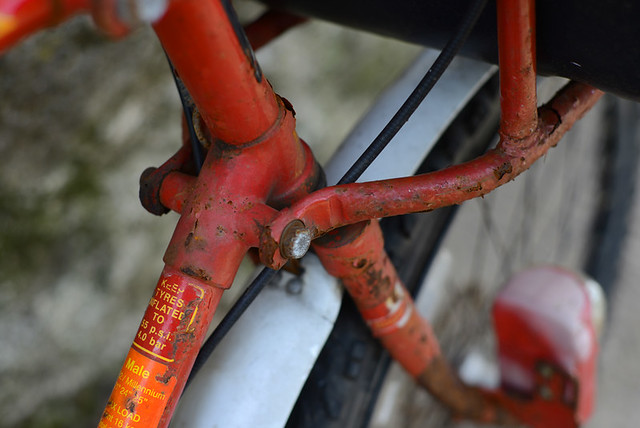
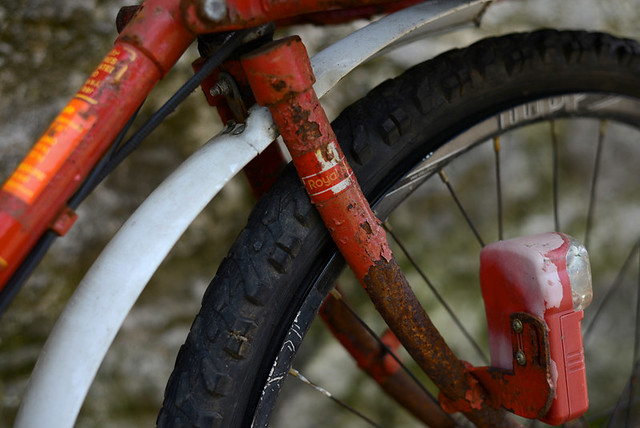
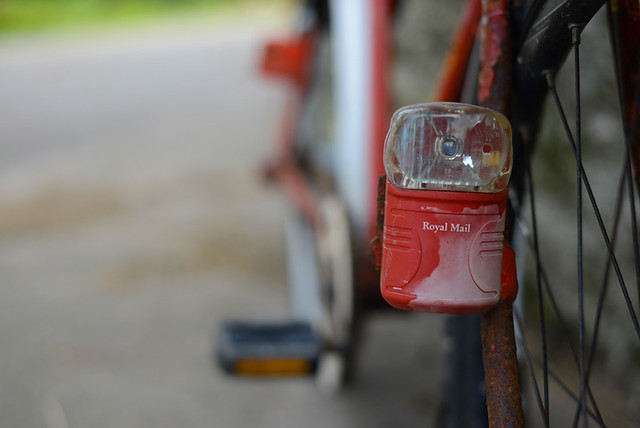
The machine - a rescue bike that found its way to me - is actually not very old by vintage bicycle standards. But its condition is rather dire - from the heavily rusted frame and components, to the missing original front wheel. Whether it can be revived I am not yet sure, but it is an interesting historical specimen regardless. 

Pashley Postal Bike
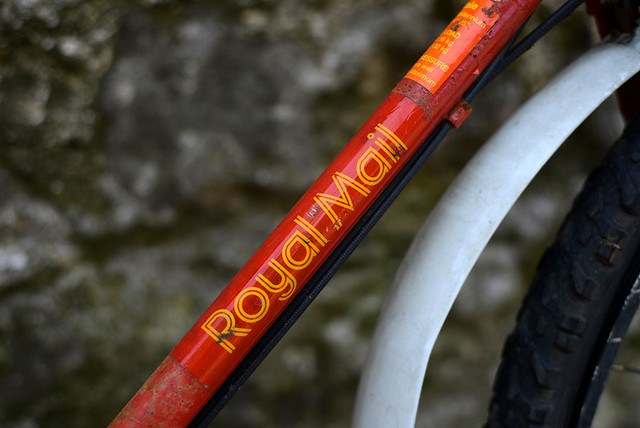
Since the late 1970's, Pashley Cycles have been the main supplier of bicycles for the Royal Mail, and it is only this year that the practice is ending. Over the decades, there have been several iterations of the Pashley Postal Bike, and the one in my possession is a "Millenium" model from the mid '90s. 

Pashley Postal Bike
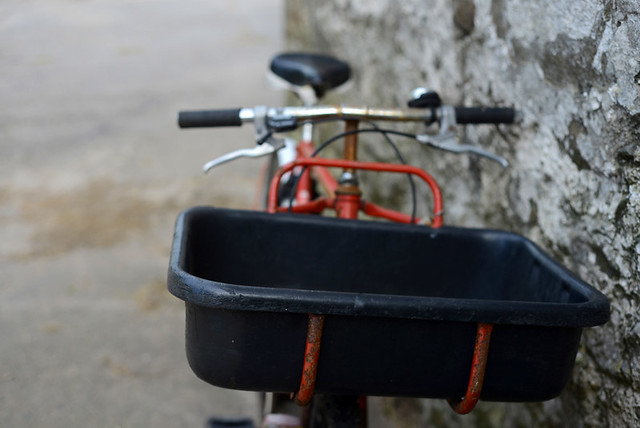
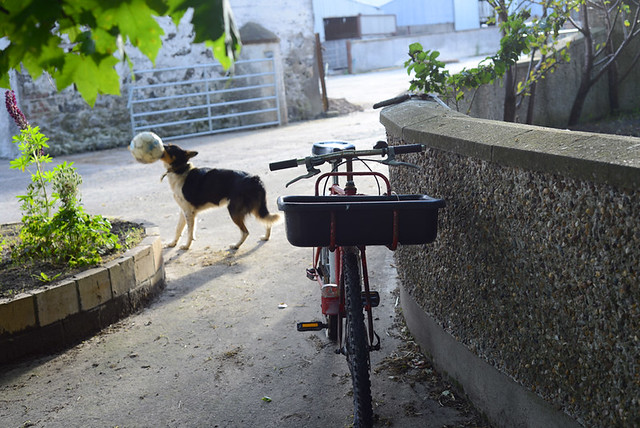
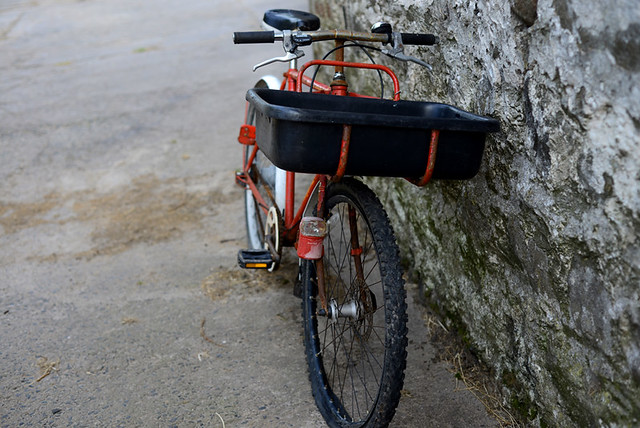
The lugged diamond frame with a slight upslope to the top tube is built around 26" wheels with fat tires. A carrier rack bolts onto the lower and upper head lugs and holds the plastic mail delivery basket. At the time this bike was made, the Pashley postal bicycles came in "male" (says so on the decal) and "female" versions. Later these were replaced by the unisex welded MailStar model

Pashley Postal Bike
One thing I've wondered about the postal bikes, is why they did not use the smaller front wheel design, so that the basket and load capacity could be made larger. However, the 26" front wheel design seems to have been standard with UK postal bicycles, even before Pashley supplied them.

Pashley Postal Bike
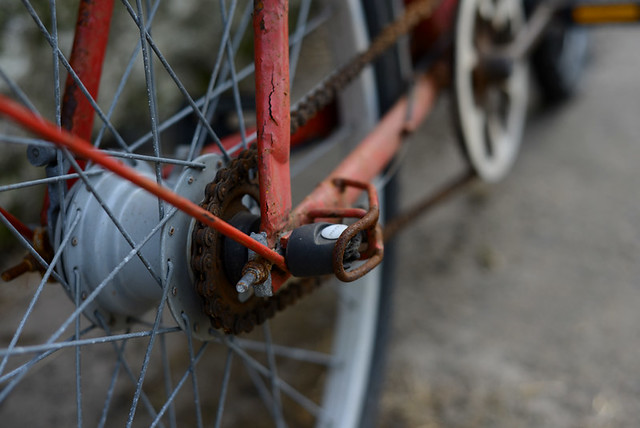
Until some time in the 1990s the postal bikes were built as single speeds with rod brakes. The Millennium model was introduced in response to the Royal Mail's request to improve the bike's handling and durability. At this time, the bikes were redesigned to have all-weather braking capacity, as well as to be sportier an more lightweight. Plastic mudguards, hub gears and brakes (3-speed SRAM - as Sturmey Archer was having production difficulties at the time), straight handlebars, and other small updates were introduced during this period while keeping the traditional lugged construction. In 2000 Pashley developed the altogether new welded unisex design, which they called the Pronto and  the Royal Mail dubbed the MailStar, ending the era of the classic delivery bike. 

Pashley Postal Bike
Since the Millenium postal bikes were designed specifically to be hardy and survive all-weather conditions, the excessive wear on this one suggests that it was left outdoors in the rain for prolonged periods of time - possibly after its  life as a postal bike had come to an end. 

Pashley Postal Bike
I am told a few people around here used to own decommissioned postal bikes and use them as farm bikes and pub bikes. Seems pretty consistent with the state this one is in.  

Pashley Postal Bike
Too bad, as it could have been a lovely surviving example of the mail-by-bike era, as well as of the classic delivery bike.

Pashley Postal Bike
If I can get it ridable, I would love to know what this bicycle feels like on the road - especially with the amount of weight a postman would typically carry. Assuming the frame has not rusted through, as far as functionality the bike requires a new front wheel, new tires, new saddle, possibly new handlebars, and a front brake system. 

Pashley Postal Bike
But everyone who's cast their eyes on it so far has suggested restoring it from scratch - sandblasting and respraying the frame, sourcing period-appropriate decals, and so forth. It is an excellent idea (and Pashley is willing to help, judging by the conversation I've just had with them). And though I am not sure I am the right person for such a daunting project, I'll try to find someone who's into it, and see what can be done with this bicycle. 

Pashley Postal Bike
The era of the postal bike may be ending in the UK. But, according to Pashley, the Royal Mail operated the largest carrier bike fleet in the World - and so, for a while at least, the postal bikes from decades past will find their way into civilian use, both local and distant. And in various states of alteration and refurbishment, the bikes will live on and ride on, their baskets filled with groceries, work bags and supplies, sometimes even with letters and parcels. 

Senin, 16 Juni 2014

Beach Cycling and Its Contents

Beach Bike
For years I've dreamt of combining two activities I love: riding my bike and swimming in the sea. Considering that Boston was right on the water, cycling to the beach proved a surprisingly elusive goal during my time there, with successful two-wheeled beach trips few and far between. But now that I live practically on the shore I am determined to make the most of it. 

But what are beaches like in Northern Ireland, you might ask with a suspicious shudder - picturing scenes of frigid waters and relentless winds, clusters of pallid holiday-makers in ponchos shivering on soggy sand as black clouds loom overhead. Well, in reality it isn't nearly that bad. For instance, when I first came here I was told it was too cold to swim without a wet suit. Foolishly, I believed this and didn't even try to go in the water at first. Then one hot day I walked in the waves and discovered the water was perfectly within the boundaries of what is considered swimmable in Northern New England! Not quite lukewarm, but not ice cold either - with a good half hour of swimming possible before cramping sets in and limbs begin turning blue. And to top it off, it is sunny nearly every day! Not for the entire day of course, but more like for an hour at a time in between bouts of fog and rain, but let's not be nitpicky here. Summer is here and the beach trips have commenced!

Beach Bike
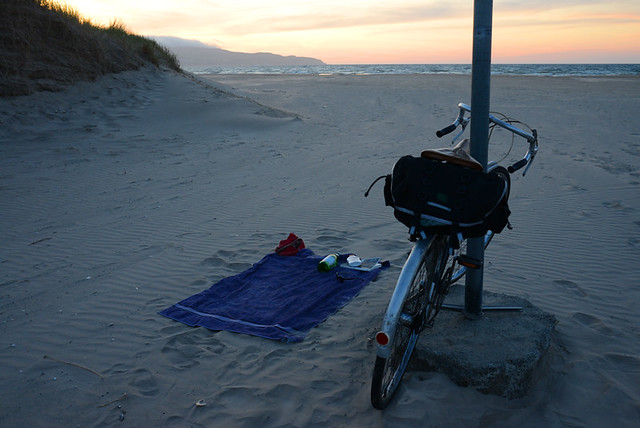
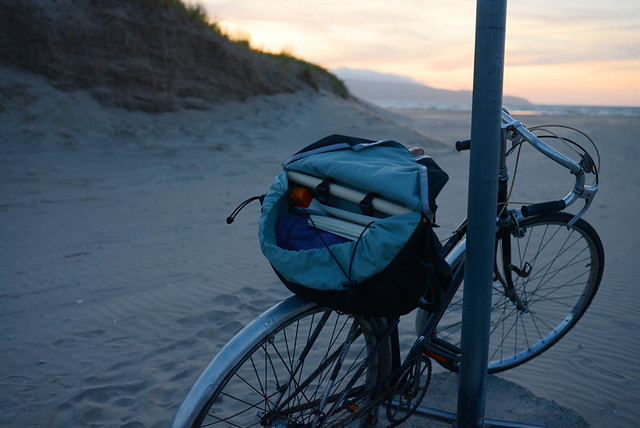
Though technically I live right on the water, the nearest official beach - staffed with lifeguards and lacking in dangerous riptides (well, relatively speaking) - is 3.5 miles away. It's a pleasant ride that can be accomplished on almost any bicycle. The easiest is to ride my Brompton, with its bottomless pit of a front basket into which I can throw anything a beachgoer could desire, laptop and portable wifi unit included. But really any bike that will accommodate a large Carradice-style saddlebag will do, and sometimes a faster bike can be more fun. 

Cycling to the Beach
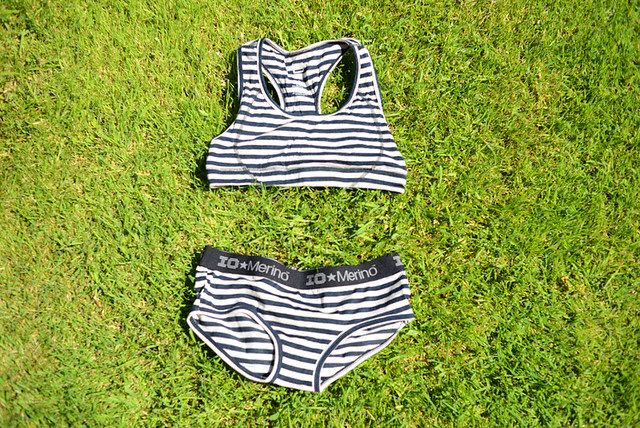
On the bike I wear my regular street clothes, with shoes that are easy to slip on and off and underwear that can pass for a swimsuit. Some time ago I discovered that wool underwear - both short and long - feels amazing to wear in the water, keeping me warmer than an ordinary swimsuit would. The wet wool also keeps me cozy once I get out of the water, and begins to dry relatively quickly. When I'm ready to leave, I just put my clothes back on over it and pedal home. Even if the wool is still damp, this feels surprisingly okay - nothing like cycling in a soggy synthetic swimsuit or wet cotton underwear. And being able to do this eliminates need to deal with the logistics of changing or transporting a soggy swimsuit by bike (though the latter is not especially complicated - just wring it out and use a plastic bag).

Cycling to the Beach
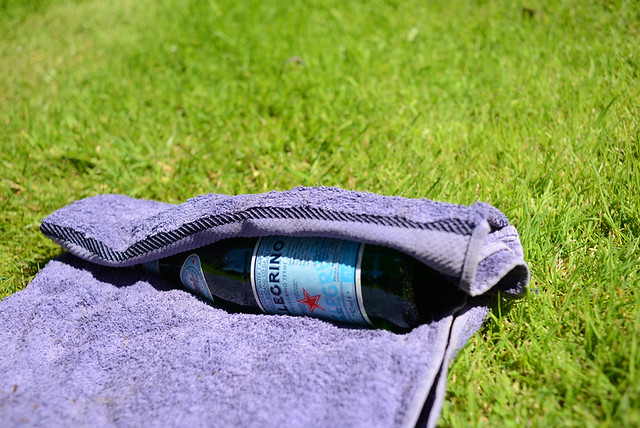
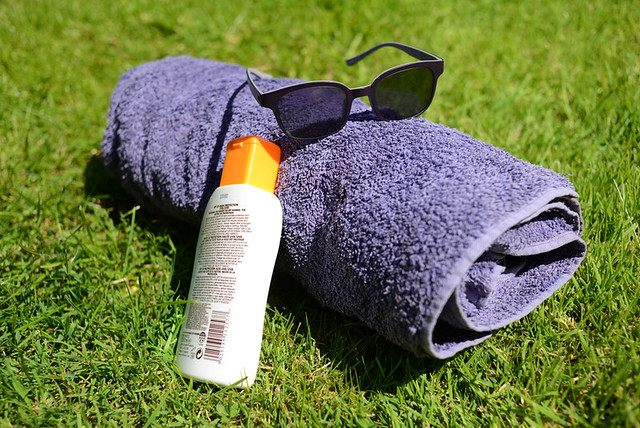
The rest of things I bring along, I will wrap in a towel - starting with the fragile stuff first, so that it's surrounded by the most padding. 

Cycling to the Beach
This makes for a neat bundle that can then simply be stuffed in a bike bag or basket, with everything held in place and not bouncing around too much. 

Beach Bike
And voila: Beach bag and beach bike. Heaven!

I've been to the beach plenty of times this summer already, and though it isn't quite warm enough to submerge myself fully yet (oh yes it is! finally swam after writing this post) I find just spending time there - reading, writing, photographing, living -  to be boundlessly enjoyable, and all the more so if I come and go by bike. There is something about cycling down a sunbaked road, in anticipation of smelling the salt, seeing the waves, and touching the sand with my bare feet, that makes for an out of this world experience. True, Ireland isn't exactly a tropical island. But something this good is best in measured doses, and worth getting rained on once and again… and again!

Senin, 02 Juni 2014

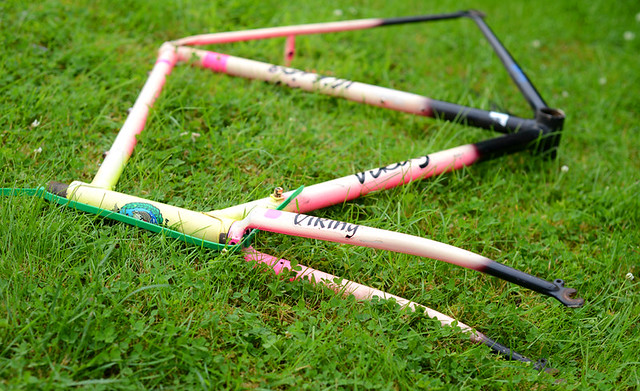
Once There Were Vikings

Viking Superstar
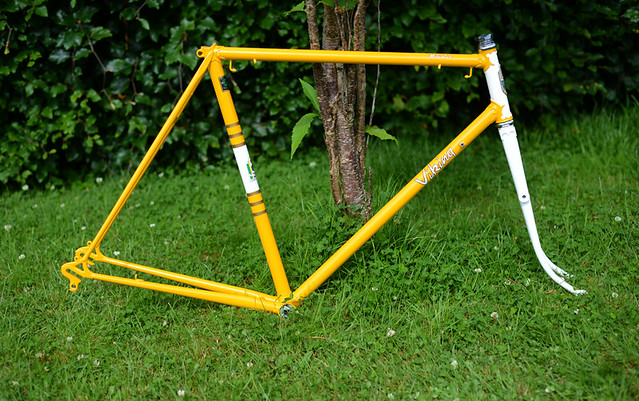
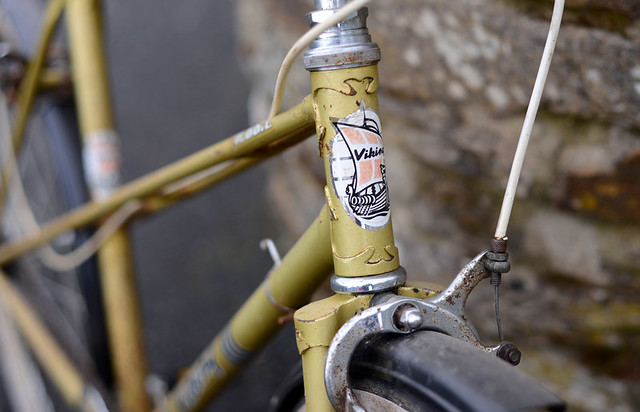
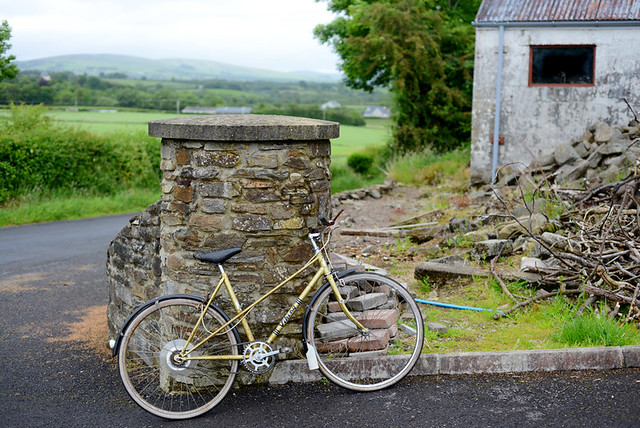
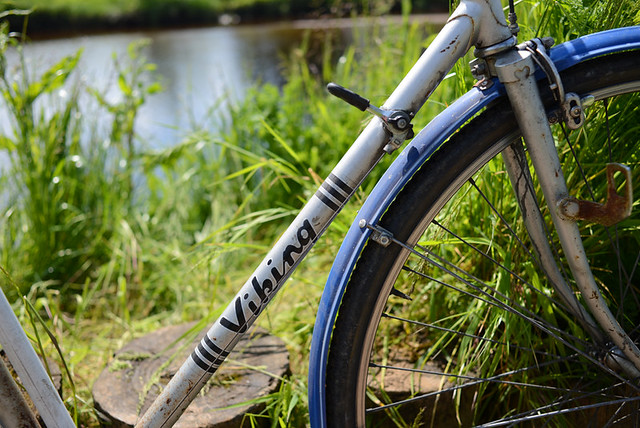
Over the weekend my pal Bryan visited from Donegal, and he brought along his current daily rider - a 1970s Viking. Chances are, you've never heard of the rather obscure Viking Cycles. But around here they are not uncommon, as they were once produced in Derry, Northern Ireland. This reminds me of a request I've had from bicycle enthusiasts with an interest in the Emerald Isle: to talk about Irish-made bikes. Were there any local manufacturers back in the day? 

The short answer is that Ireland does not have a rich history of bicycle production. There was a handful of framebuilders active in Northern Ireland who made machines to order, and I've been gathering information about them with interest. But as far as manufacturers, large scale or small, my understanding is that there weren't any native to the island. At some point Raleigh opened a factory in Dublin, but they were a huge company with facilities all over the world. Viking Cycles, with their production exclusive to Derry from the 1970s until their demise, might be the closest thing to a local manufacturer. 

Viking Wolverhampton
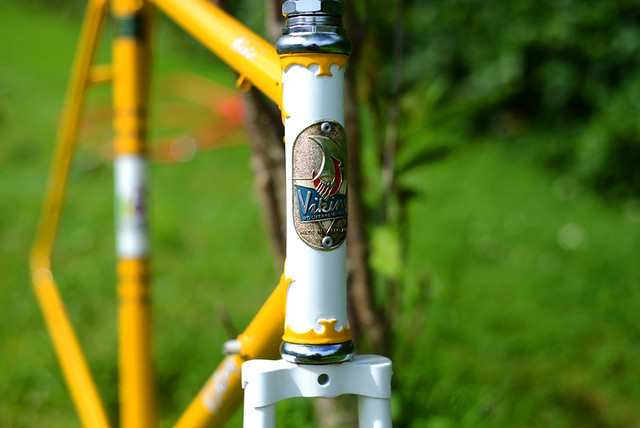
Originally an English company, Viking was formed in 1908 (though this is debated) by Alfred Victor Davies in Wolverhampton. By the 1930s they were focused on "lightweights" and began sponsoring racing teams. 

Viking Wolverhampton
The beautifully lugged race bikes from this era were, by all accounts, of excellent quality, if not especially unique. "You're behind the times if you're not riding Viking!" the adverts from this period proclaimed. 

Viking Debbie
This went on successfully until the 1960s, when Viking began to decline and eventually folded, its remnants sold to Lambert/Viscount (UK/USA), then Trusty (USA), then possibly to a man named Roy Clements. What happened during this period precisely is not known, but by 1977 Viking Cycles re-emerged as a new company, with production facilities in Northern Ireland. 

Viking Debbie
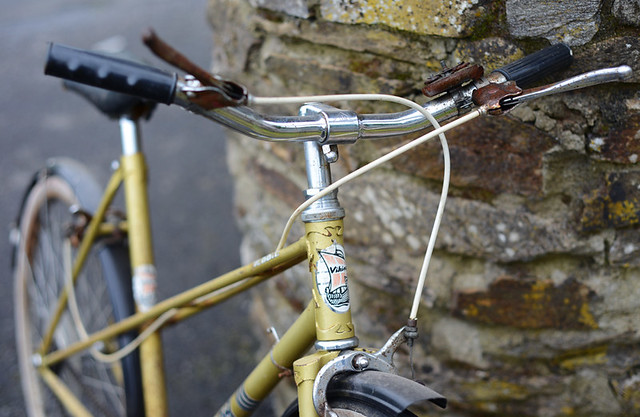
Over the course of the year I've been here, I have seen perhaps a dozen NI Vikings, some as part of collections and others "in the wild." The description of these machines as "competent but uninspired bicycles" seems pretty much spot on. A couple of high-end, handbuilt models existed during this period as well, but examples of those show up very rarely.

Viking Debbie
The Vikings I've seen have been low to mid-range 10-speeds from the late '70s and '80s. The diamond frames and mixtes look well ridden, and by their owners' accounts were decent, no-frills bikes.  

Flourescent Viking
When exactly the Derry-based Viking folded is unclear, but production probably ended by the 1990s and officially the company was dissolved in 2012. Though the brand was hardly legendary, to local bicycle enthusiasts it is significant as a remnant of bicycle manufacturing in Northern Ireland.

Viking Superstar
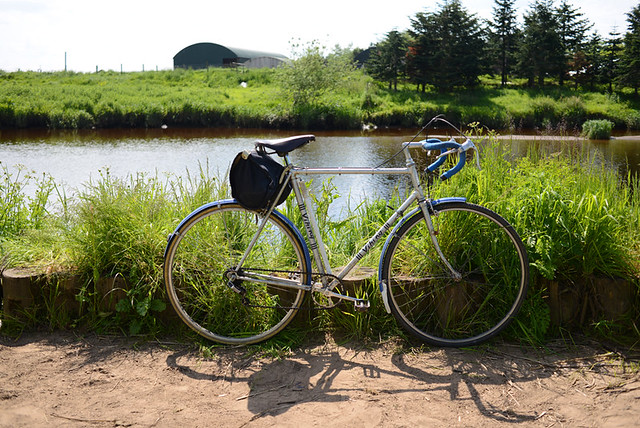
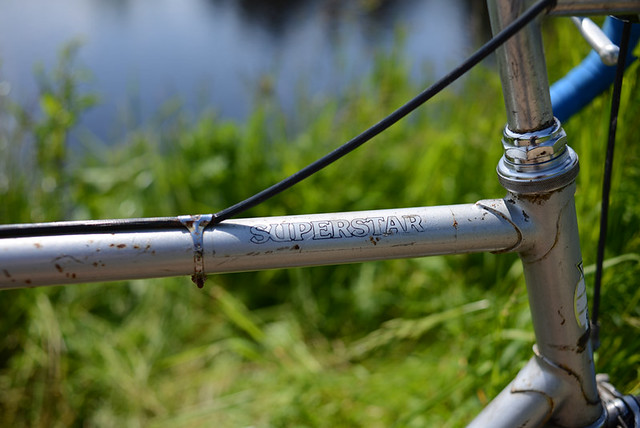
The bicycle Bryan brought along is a Viking Superstar 5 - 

Viking Superstar
- a basic lugged road bike with a single chainring 5-speed drivetrain

Viking Superstar
operated by a single downtube shifter. 

Viking Superstar
This bike was rescued from the trash some years back, and Bryan nursed it back to health with some used replacement parts, including a Brooks Competition saddle, a rear wheel to replace the damaged original, and a set of 27 x 1 1/4" tires.

Viking Superstar
He replaced the original 46t chainring with a 40t to lower the gearing, and fitted some nice blue fenders. I thought these were Bluemel mudguards at first, but they are in fact a lower end alternative -  made by a Scottish company called Bantel. The rich vibrant blue adds some lively accents to the all- silver bike. 

Viking Superstar
In truth, to come up with much of interest about this machine other than its place of manufacture would be a struggle! But that's all right. It is a handsome bike, and a very ridable bike according to Bryan. He enjoys it as an everyday "user bike," as much as he enjoys knowing it was made just 20 miles from his house. Not many cyclists in Ireland can say that about their bicycle. 

For more information about Viking, visit the V-CC-affiliated Classic Viking Cycles site, as well as this history page from the Transport Museum. Bryan's photos of his bicycles and other things can be found here. The other Viking frames shown in this post come from this collection

Jumat, 23 Mei 2014

Three Times a Lady: the Lives and Times of Modified Vintage Bikes

1960s BSA Roadster
Last year I wrote about my ethereal friend Clive and his bicycle Lady Huck - a 1960s BSA roadster in a lovely dark shade of racing green. Sadly for me and her both, Clive moved back to New Zealand a few months back. Too costly to transport, Lady Huck was left behind in a shed. "What ever will become of her?" were Clive's tearful words as he boarded the steamship, Huckless.

1960s BSA Roadster
But fate has a way of bringing bikes and people together. For around this same time, my boyfriend (Wait, what?! Yes. Moving on now...) spoke those magic words I'd been longing to hear for months. 

"Listen," he said, astride his rusty mountain bike, eying my Brompton thoughtfully. "Do you think I need mudguards and something over the chain? I keep getting my clothes dirty." 

"Well," I said, as casually as possible, fantasies of him in tweed already running rampant. "If you don't mind an old bike, I know where we can get one with all of those things straight away."

"How old are we talking about here?" he asked suspiciously, recalling the non-functional rod brakes and decomposing tires on my Triumph. 

"Oh don't worry, this one is years newer. You remember, Clive's green bike. It's practically cutting edge."

Lady Huck Under New Ownership
Several days later Lady Huck was under new ownership. 

1960s BSA Roadster
Because of their rise in popularity over the past years, there is now an interesting new category of vintage bicycles on the market: Those that, in addition to their original life span - and, possibly after several decades of languishing in a shed - have lived a second life in modern times. 

1960s BSA Roadster
Typically these bikes will have been cleaned and at least partly refurbished or modified. Deteriorated saddles, tires and grips may replaced with new ones. 

1960s BSA Roadster
Caked dirt and rust removed with diligence.

1960s BSA Roadster
New cables and brake pads might be installed.

1960s BSA Roadster
Perhaps the handlebars are swapped, the levers' position altered, or the gearing modified.

1960s BSA Roadster
Or rod brakes replaced with calipers (though on this bike this was apparently done in the factory). 

1960s BSA Roadster
Sometimes the updates are dramatic. But even when they are subtle, the Second Life vintage bike will have a look to it that sets it apart from the untampered-with originals. And it's fun to try and spot all the little changes the contemporary owner had made. For those seeking the comfort and charm of a vintage bicycle with modern updates, some excellent deals can be had when these bikes are put up for sale by the second owner. On the other hand, there are those who derive pleasure from doing all the cleanup and mods themselves. My boyfriend is more in the latter category, but as Lady Huck needed a home he was happy to oblige.

Lady Huck Under New Ownership
The bicycle being functional and ready-to-ride also gives him a chance to decide whether he even likes vintage roadsters. Last time he rode one was as a child, before he got into motocross and road cycling, and that was decades ago. The geometry and handling are dramatically different from what he's used to ("the front wheel is miles away!"). But he loves the feel of the old Sturmey Archer hub and the upright position. And, riding the BSA down the busted-up farm lanes, he can't get over how cushy the bike feels over rough surfaces - better than a mountain bike with fatter tires.

Lady Huck Under New Ownership
The BSA is too big for me to try, so I cannot contribute any feedback, but I'm glad he's having some fun with it. His position needs tweaking I think, and the bike is screaming out for a large saddlebag… but I'll not interfere and see what he gets up to on his own accord.

1960s BSA Roadster
Perhaps Lady Huck will stay just as she is, or perhaps she will be altered further. Either way, she has been given a 3rd chance at life.

Rabu, 16 April 2014

The Handbadge

1950s Rudge Sports Roadster
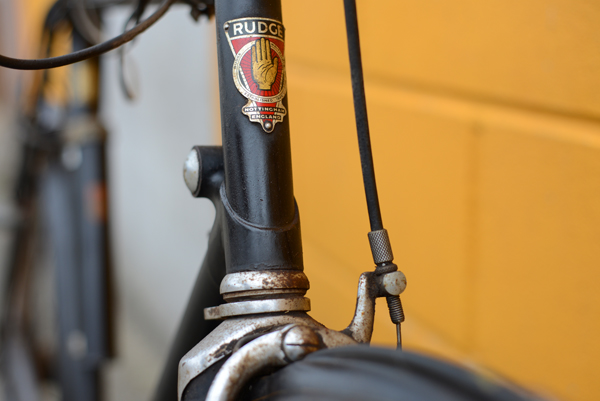
Until recently I had not really considered the meaning of the Rudge headbadge. It was only a couple of days ago when, having spotted a lovely sports roadster with a full-colour version of the emblem, that it hit me. Is this the Red Hand of Ulster?

By now I have grown used to seeing renderings of the up-turned hand on flags and logos - the mystical symbol of Northern Ireland, appropriated, interestingly and confusingly enough, by both Loyalist and Republican groups, as well as by various non-sectarian organisations, clubs and the like. And now here it was on this bicycle.

1950s Rudge Sports Roadster
I scanned my memory for what I recalled of Rudge history, but none of it had to do with Ulster. So I looked into it once again. Founded in Coventry, England by engineer Daniel Rudge, the company later merged with Birmingham-based Whitworth Cycle Co. to become Rudge-Whitworth Cycles (and later motorcycle manufacturer). Nothing geographically close to Northern Ireland here. Neither did the old catalogues seem to offer any explanation. The one thing I did find acknowledging the link was the Rudge Ulster motorbike. That, however, was named after the 1928 Ulster Grand Prix race, won on a Rudge machine - an event which the headbadge precedes.

1950s Rudge Sports Roadster
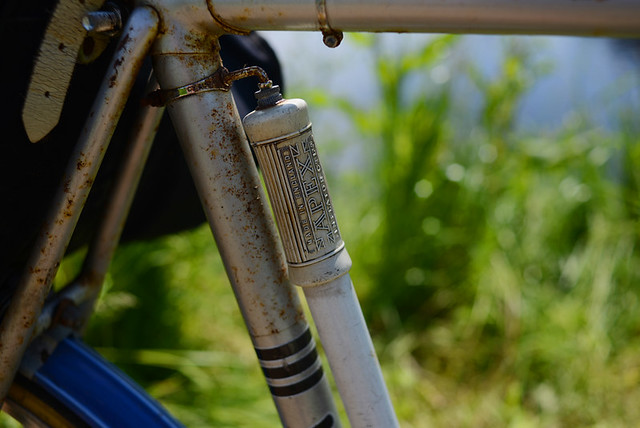
The Rudge sports roadster distracted me from the hand question with its many nifty features, such as this original Sturmey Archer Dyno Luxe battery pack, mounted on the seat tube.

1950s Rudge Sports Roadster
Wired to the battery pack are the headlight and tail light, also Sturmey Archer branded. During this time period, it seems that manufacturers used dyno hubs, bottle generators and these dry battery packs simultaneously. I've often wondered what determined which method they chose.

1950s Rudge Sports Roadster
Like a missing key to a vintage wheel lock, the definitive answer to the question of the Hand's origin may never be found. The most likely explanation seems to be that the Rudge family (edited to add: actually, the Whitworth family, as it seems the logo came from their side of the Rudge-Whitworth merger) hailed originally from Northern Ireland and used the Red Hand symbol to commemorate this. However I also love Jim Langley's thinking that the symbol meant "hand made." If only we could "talk to the hand" and ask! 

Whatever the origin of the Rudge emblem - rendered in several versions on their headbadges and chainrings - it is a striking symbol, in particular when the bikes are spotted in Northern Ireland. And if anyone is in the market for a vintage Rudge roadster, this one can be had at Gerald Deehan's Vintage and Antique Swap in Limavady.