Senin, 30 Juni 2014

Meditations on Early Ruin

Doing errands in the city today, I spotted a woman rolling what I took to be a pre-1960s loop frame roadster. From my vantage point across the street, the bike had a look about it, suggesting it had known better days: a wobble to the front wheel, a crimp to the rear fender, a lumpiness to the saddle, an orangey aura around the black silhouette suggesting a generous coating of rust, and a general ramshackleness that marked it as a tired, creaky, longsuffering thing. The rod brakes and generator bottle corroborated my impression of its age. By the time I reached the bike, the woman had locked it up to a pole and disappeared into a building. Carefully I approached to examine the decals - or what remained visible of them, as most of the frame's surface was caked in dirt and blighted with all manner of exotic fungal growths. When I finally could make it out, the writing surprised me: Gazelle Toer Populair. At first I thought the owner might have plastered new decals onto an old frame. But identifying features in its construction confirmed that I was looking at a retro, not a vintage bicycle, made, at the earliest, in 2009.

What could account for such exuberant decay in a machine only 5 years of age? I imagined the bike being tossed, as a prank, off the Peace Bridge into the Lough Foyle, where it served as a playground for aquatic life before being fished out by local boys and sold at a car boot sale. I imagined other scenarios, too. But even as I played them out in my mind, I knew the bicycle's real history was nowhere near that exotic. Though this specimen was one of the worst so far, I have met others here with prematurely aged bikes, with bikes in horrendous condition for which they have no particular explanation.

Ireland is a strange, damp place. Vegetation flourishes. Man-made things fall apart. Both can happen with breathtaking speed.

I am slowly renovating the house I live in, which, judging by its condition when I moved in, I had at first thought lay empty for decades. It was in fact last occupied just 3 years ago. In this time span, rot and mold had crept in with methodical determination, while on the outside weeds and stinging nettles the size of trees smothered the once-manicured garden, their roots cracking brick walkways and stone walls. The plastic on the decade-old kitchen counters had softened and browned in the manner of pre-war cellulose nitrate. In the upstairs bedrooms I peeled off decomposing wallpaper I was certain had been put up in the 1950s, to discover children's scribbles behind it with the date 2007. Even the overall age of the house is not what I had first assumed from its look and feel. It was built not in the century before last, but in the 1940s. I wonder now how many other lovely old houses I spot in the area are really fairly new constructions.

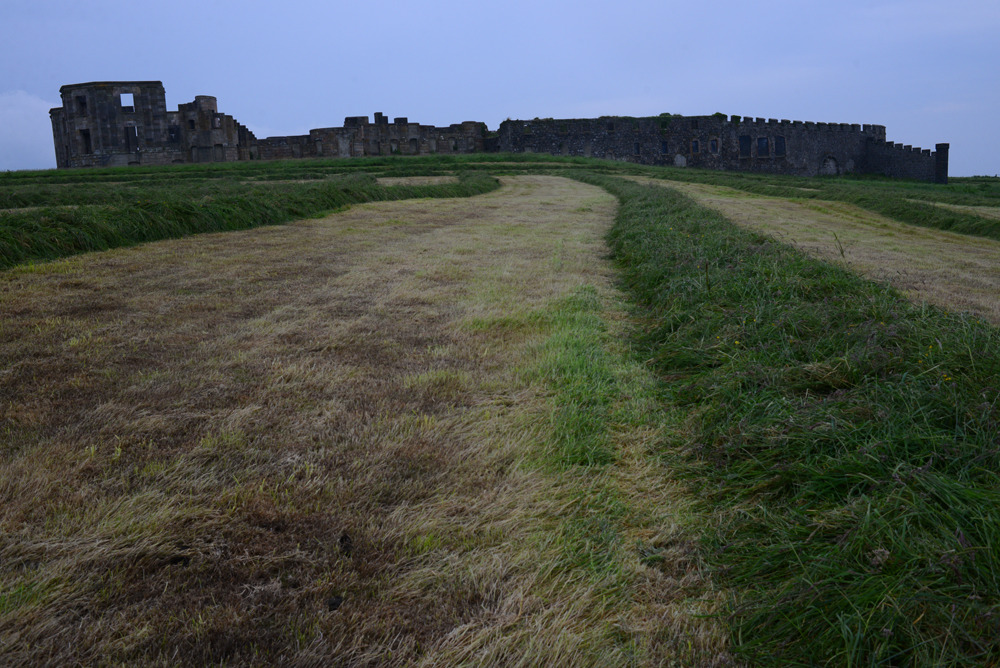
On a cliffside 4 miles down the road stands a North Coast landmark, the enormous skeletal remain of Downhill House. When new to the area and not yet familiar with this structure, I heard locals refer to it as "ancient" as if it were some excavated archaeological site or an early medieval castle. Considering that even from a distance I could spot obvious neoclassical elements, this struck me as unlikely. Still, when I looked it up I did not expect the dates to be as recent as they were: The latest version of the house was built in the 1870s and remained inhabited until after World War II, its trajectory toward disrepair beginning mid-20th century. To think that within that time, the sturdy-looking giant, built no doubt with the finest materials available in its day, became this roofless maze of crumbling stonework - so thoroughly dilapidated that locals (some of whom must surely still remember it intact!), prefer to playfully re-imagine it as an ancient ruin.

There is a trend in some circles of cyclists to celebrate - and even try to hasten - signs of aging on their modern machines. From tattered grips to chipped paint, even spots of rust and tiny dents, such things are cherished as evidence that the bike is authentic and "well loved." This trend can be observed all over contemporary culture, from distressed jeans to the "shabby chic" style of decorating. To a critical theorist, this hunger for decay is symptom of a desire for history in an ahistorical era. But I wonder also whether it is specific to areas where things tend to preserve well - decay requiring either many years or special effort. Here in Ireland, if I want "history" to happen to a modern bike all I need to do is leave it in the garden for a week, then watch it succumb to stunningly early ruin.

Rabu, 25 Juni 2014

Black and White

Two Very Different Takes on Step-Throughs!
42 centimeters, or nearly 17 inches! Any guesses what that figure refers to? Go on, think about it before I tell you. Anyone? 

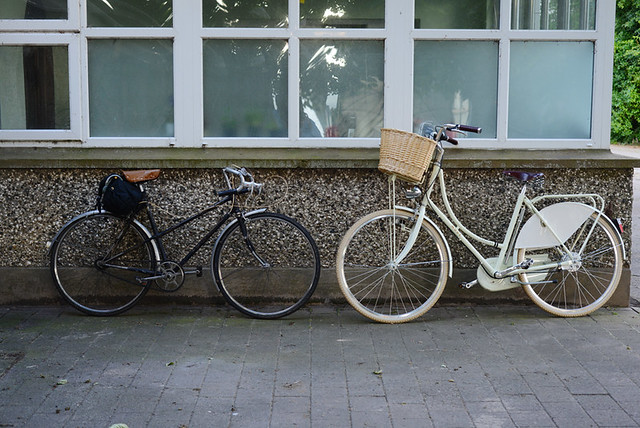
Over the past few weeks I've had under my guardianship two step-through bicycles that could not be more different from one another: a vintage Claud Butler Lady Lightweight that belongs to a friend, and a modern Mosi Carolina that was sent to me for review by the manufacturer. The former was essentially designed as a time trial bike (according to 1930s notions of what that entails) with all-arounder capability; the latter as a Dutch-style urban commuter. Switching back and forth between these machines has been an interesting experience - especially considering that 42cm is the difference in their handlebar heights! In fact I don't think I've ever ridden a bicycle that's quite as upright as the Mosi or quite as low-leaning as the Claud Butler. And to think that both of them can be described as step-throughs or "lady's bikes" - evoking a similar image while in reality being so different.

And yet, despite these differences what I found most striking about the two bikes was an attribute they had in common, aside from the low step-over: Both felt absolutely amazing to ride. Amazing in an entirely different way form one another, but amazing nonetheless, with each machine's handling feeling "just right" in the context of what that bike was meant to be. This is something not many people think about unless they are involved with product design or product reviews. But it is a core criterion based on which a product can be judged as successful. 

Recently, I was talking to a Belgian acquaintance who owns a shop selling European utility bikes, and who is also a former amateur road and track racer. In his opinion, if a Dutch-style bike feels "too upright" (and size/weight/fit are eliminated as the culprit), it is because there is a flaw in that model's design. A well-designed bicycle of its kind should feel as if it's supposed to be that upright, evoking an "Ooh, this is very different but very nice" type of reaction from even the roadiest of roadies, as opposed to a request to slam the stem. Similarly, a well designed utility bike of this type should not feel slow-rolling in action; subjectively it should feel as if its speed is just right for how fast you want to go while riding in that position. And he applies the same principle to what they refer to in continental Europe as "sports bikes" - that is, road-racing or touring bikes with drop bars. In theory, even to a rider new to the sporty side of cycling, a well designed roadbike should feel intuitive and safe after a minimal initiation period. If it doesn't, something is off. 

For the most part, I think I agree with this way of putting things. Though my own cycling experience so far is limited to just over 5 years, I've crammed a lot of pedaling time and a great number of bikes into those years. I have ridden bikes that did not feel "just right" to start with and so I'd try to wrangle them into being just right with mixed (usually not entirely successful!) results. I have also been lucky enough to ride bikes that have felt exactly right from the get-go. And the thing is, once you've had that experience you know it's possible. You know that not all bikes of the same category, even if they look similar and are similarly priced, are in fact the same in how well they perform the function they were designed to perform. Whether it is a city bike or a racing bike, or something in another category entirely, when a bike feels just right we tend to know it. Sometimes it really is black and white.

Selasa, 24 Juni 2014

Made with Pedal Power! The Velo Bagworks Tool Roll and Give-Away

Velo Bagworks Tool Roll
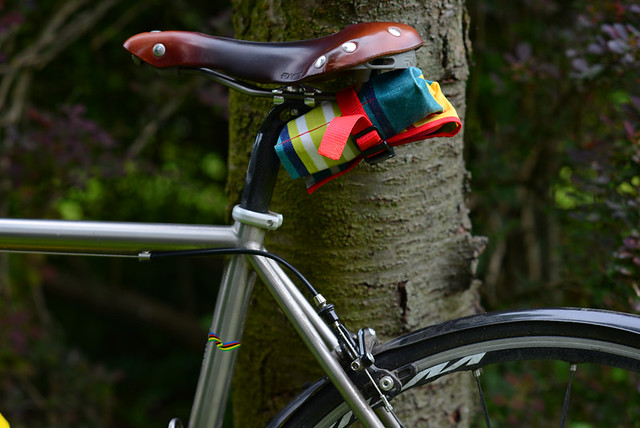
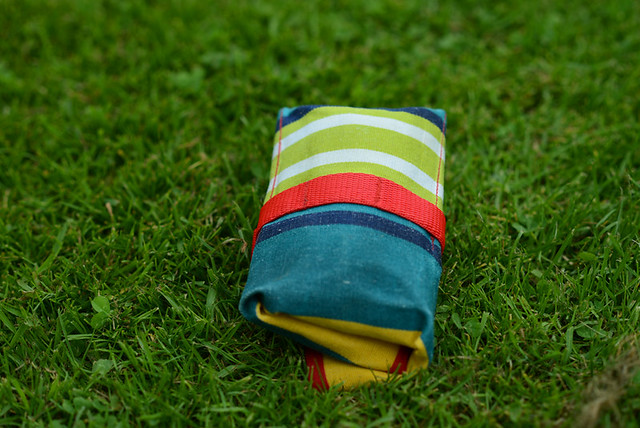
Aside from its miniature striped adorableness, what drew me to this Velo Bagworks tool roll was its maker Robert Anderson's claim to produce it "on a 1922 Singer sewing machine that doesn't even have a plug." Oh hello! Just minutes earlier I'd been sitting in front of my Singer Model 115 Sphynx of 1919 vintage, rocking the iron pedal in pursuit of finishing some curtains. Who needs electricity when you've got pedal power, eh? And how deliciously appropriate to make bicycle tool rolls for pedaling, by pedaling!

Velo Bagworks Tool Roll
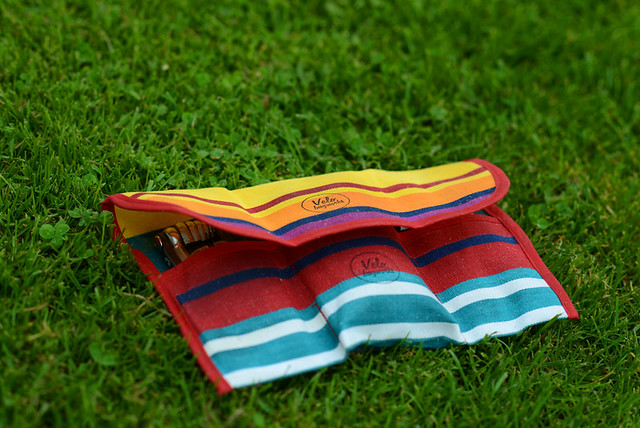
The minimalist, under-the-saddle tool-roll has become a popular offering from cottage industries and DIY enthusiasts. It is an item that is useful, fun and relatively easy to produce - allowing makers to offer a handcrafted product at a reasonable price. New to the market, Velo Bagworks tool rolls are made in Devon, England and sold via Robert's Etsy shop at around £15-20 apiece depending on fabric and pattern. Some are made from a PU-backed cordura and some out of waxed cotton canvas (pictured here), both reasonably waterproof. 

Velo Bagworks Tool Roll
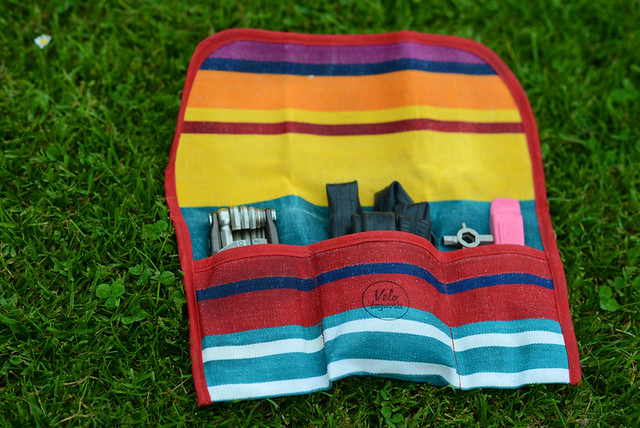
There are several features of the Velo Bagworks tool roll that make it stand out from similar products of its kind. Firstly, it is among the smallest, most compact tool rolls I've ever seen. 

Velo Bagworks Tool Roll
While large enough to fit the basics - including a good sized multi-tool, spare tube, tire levers, even a small pump or CO2 cartridge - it makes use of space with impressive efficiency and folds up neatly into a wallet the size of a large adult fist. For those who prefer their tool bags as small as practicable, this one is a good candidate.  

Velo Bagworks Tool Roll
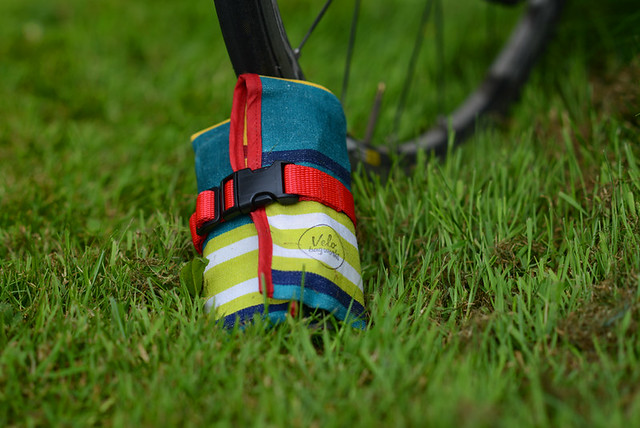
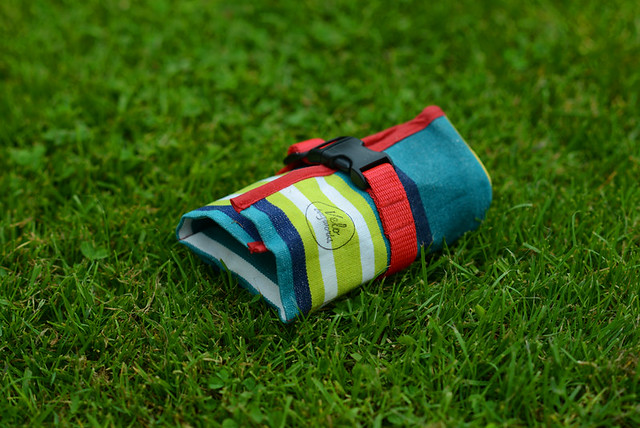
Additionally - and this is perhaps the more important feature to mention - the Velo Bagworks tool roll is designed to close and attach securely. The traditional "bike burrito" style tool roll is typically held together with a leather toe strap, which tightens around the roll but is not attached to it. As several cyclists I know who've used such bags have learned, this design carries a risk of losing the tool roll in action: It can simply slip out of the strap and you'll never know it! No such danger with the Velo Bagworks, as its lighweight nylon strap is sewn into the fabric of the roll itself.

Velo Bagworks Tool Roll
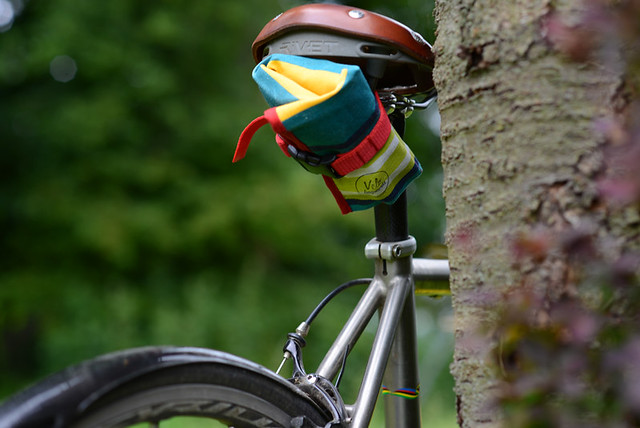
Threading easily through the rails of any standard bicycle saddle, the Velo Bagworks tool roll uses a snap-closure buckle, making it simple and quick to fit and remove, as well as to tighten as necessary. The roll is narrow enough to sit snugly under the saddle and does not interfere with pedaling. Because of the small size of the bag, those who like to clip a tail light to their seat post still might be able to fit it in if enough seatpost is showing.

Velo Bagworks Tool Roll
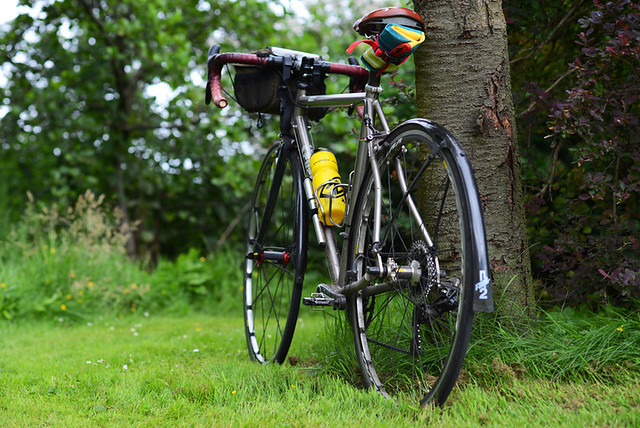
The Velo Bagworks tool rolls come in a variety of traditional colours, as well as these crazy "deck chair stripes" patterns. I love how the bright stripes look on my bare-metal bike, though they pretty much go with any bicycle colour. 

Velo Bagworks Tool Roll
If you like the look and sound of the Velo Bagworks tool roll, one of them could be yours at no cost. We would like to give away a similar roll to the one pictured here (the exact pattern of the stripes is a little different on each bag) to a Lovely Bicycle reader located in the UK or Ireland. 

If you'd like to take part in the give-away, simply leave a comment to that effect, and don't forget to include your contact email. And if you're in the mood to entertain, tell us: What is the strangest thing you've ever carried in your tool roll or saddle bag? Any bag-related adventures or misadventures? I'll get things started by admitting I've put an uncapped 1L bottle of water into a saddlebag...

Entries accepted till Thursday, 26 June, 11:59pm GMT. Many thanks to Velo Bagworks for the give-away, and, as always, thank you for reading Lovely Bicycle!

Jumat, 20 Juni 2014

Gone Postal

Pashley Postal Bike
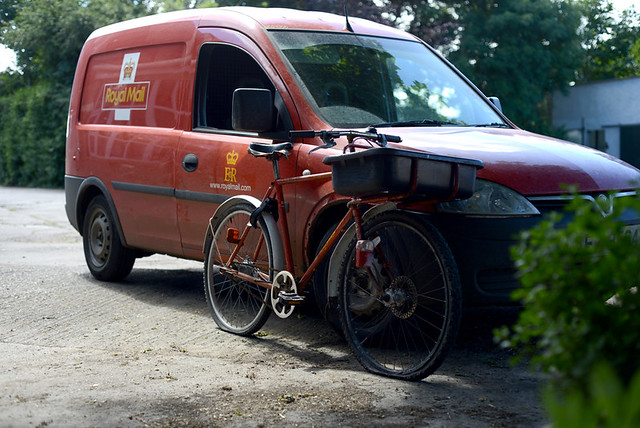
When the postman stopped by with today's mail, I doubt he expected to find a two-wheeled ancestor of his delivery machine in my yard. Yet that is exactly what happened.

"Ever ridden one of these?" I asked.
He shook his head vigorously. "How old is this thing anyway?" 

Pashley Postal Bike
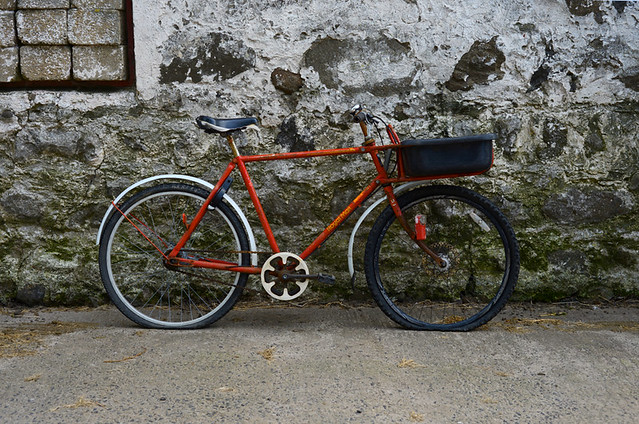
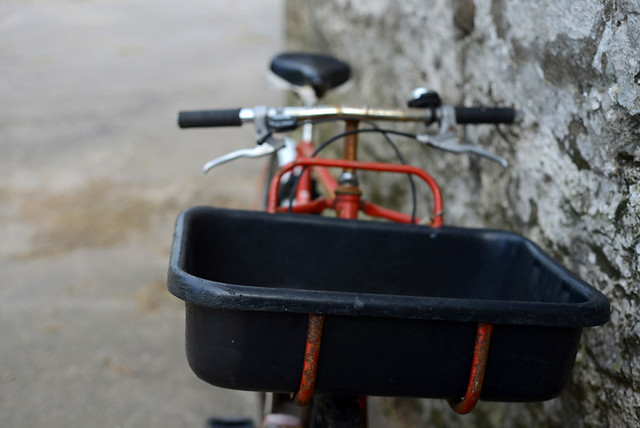
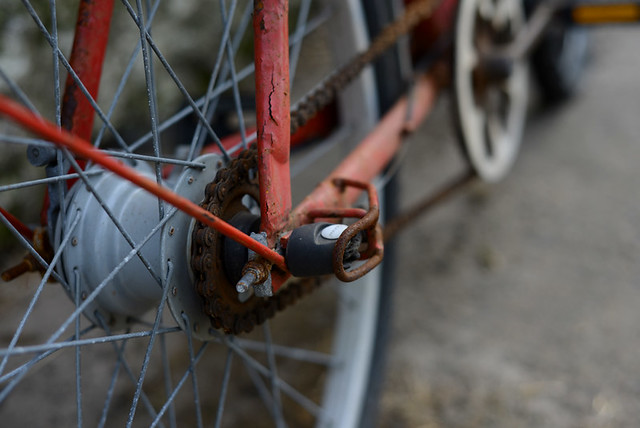
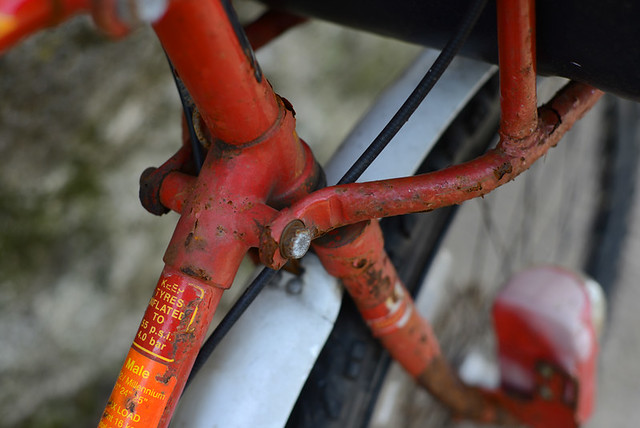
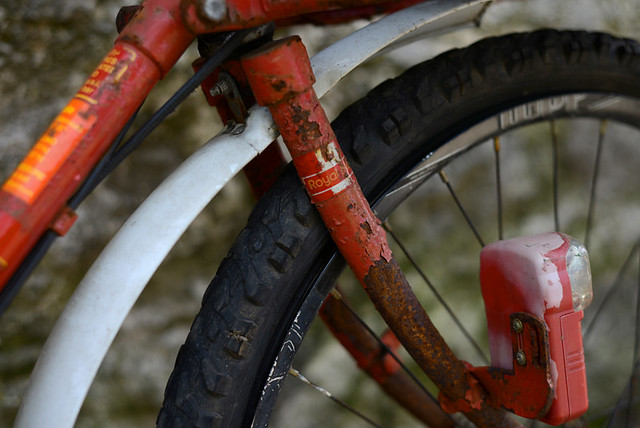
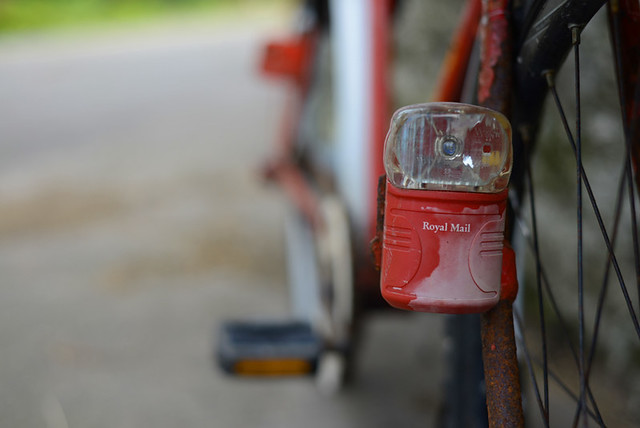
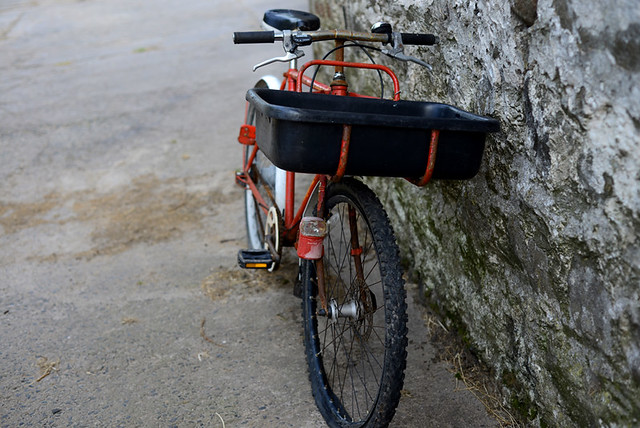
The machine - a rescue bike that found its way to me - is actually not very old by vintage bicycle standards. But its condition is rather dire - from the heavily rusted frame and components, to the missing original front wheel. Whether it can be revived I am not yet sure, but it is an interesting historical specimen regardless. 

Pashley Postal Bike
Since the late 1970's, Pashley Cycles have been the main supplier of bicycles for the Royal Mail, and it is only this year that the practice is ending. Over the decades, there have been several iterations of the Pashley Postal Bike, and the one in my possession is a "Millenium" model from the mid '90s. 

Pashley Postal Bike
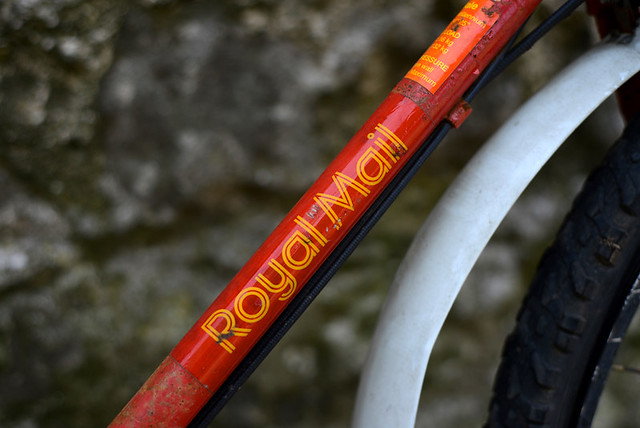
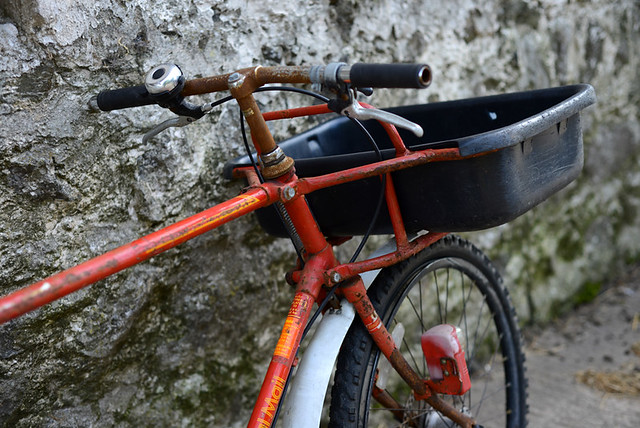
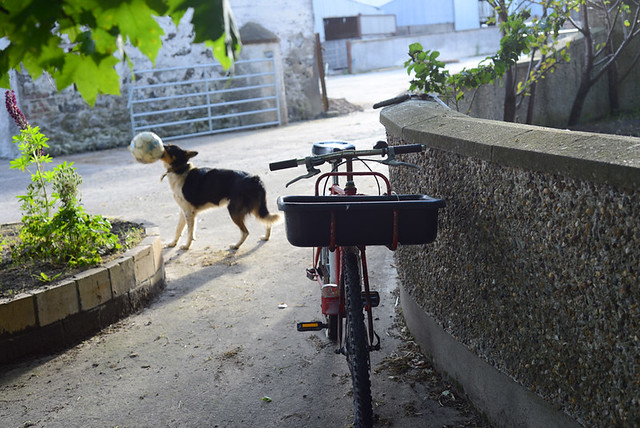
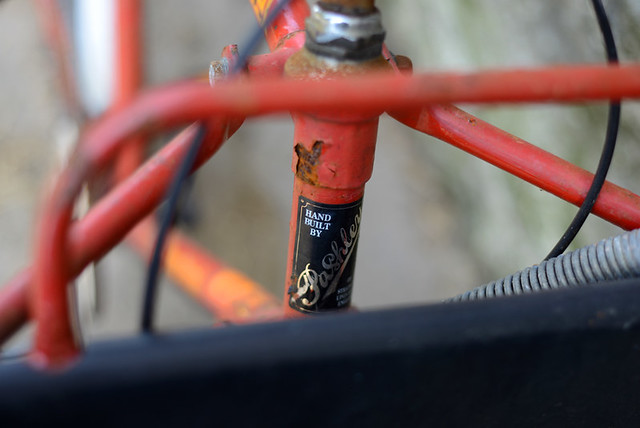
The lugged diamond frame with a slight upslope to the top tube is built around 26" wheels with fat tires. A carrier rack bolts onto the lower and upper head lugs and holds the plastic mail delivery basket. At the time this bike was made, the Pashley postal bicycles came in "male" (says so on the decal) and "female" versions. Later these were replaced by the unisex welded MailStar model. 

Pashley Postal Bike
One thing I've wondered about the postal bikes, is why they did not use the smaller front wheel design, so that the basket and load capacity could be made larger. However, the 26" front wheel design seems to have been standard with UK postal bicycles, even before Pashley supplied them.

Pashley Postal Bike
Until some time in the 1990s the postal bikes were built as single speeds with rod brakes. The Millennium model was introduced in response to the Royal Mail's request to improve the bike's handling and durability. At this time, the bikes were redesigned to have all-weather braking capacity, as well as to be sportier an more lightweight. Plastic mudguards, hub gears and brakes (3-speed SRAM - as Sturmey Archer was having production difficulties at the time), straight handlebars, and other small updates were introduced during this period while keeping the traditional lugged construction. In 2000 Pashley developed the altogether new welded unisex design, which they called the Pronto and  the Royal Mail dubbed the MailStar, ending the era of the classic delivery bike. 

Pashley Postal Bike
Since the Millenium postal bikes were designed specifically to be hardy and survive all-weather conditions, the excessive wear on this one suggests that it was left outdoors in the rain for prolonged periods of time - possibly after its  life as a postal bike had come to an end. 

Pashley Postal Bike
I am told a few people around here used to own decommissioned postal bikes and use them as farm bikes and pub bikes. Seems pretty consistent with the state this one is in.  

Pashley Postal Bike
Too bad, as it could have been a lovely surviving example of the mail-by-bike era, as well as of the classic delivery bike.

Pashley Postal Bike
If I can get it ridable, I would love to know what this bicycle feels like on the road - especially with the amount of weight a postman would typically carry. Assuming the frame has not rusted through, as far as functionality the bike requires a new front wheel, new tires, new saddle, possibly new handlebars, and a front brake system. 

Pashley Postal Bike
But everyone who's cast their eyes on it so far has suggested restoring it from scratch - sandblasting and respraying the frame, sourcing period-appropriate decals, and so forth. It is an excellent idea (and Pashley is willing to help, judging by the conversation I've just had with them). And though I am not sure I am the right person for such a daunting project, I'll try to find someone who's into it, and see what can be done with this bicycle. 

Pashley Postal Bike
The era of the postal bike may be ending in the UK. But, according to Pashley, the Royal Mail operated the largest carrier bike fleet in the World - and so, for a while at least, the postal bikes from decades past will find their way into civilian use, both local and distant. And in various states of alteration and refurbishment, the bikes will live on and ride on, their baskets filled with groceries, work bags and supplies, sometimes even with letters and parcels. 

Rabu, 18 Juni 2014

2 Wheels, 4 Legs: a Study in Attitudes

Can I Come Too?
Since the very start of this blog I have shared random, at times ludicrous thoughts about pets and bicycles. But never have I been around such a large number of animals as now that I live in rural Northern Ireland. From being held up by bovine traffic jams, to getting my bicycle grips eaten by shameless Shetlands, to herding wayward lambs, to being herded myself, I've had enough experience with animals on my bike to last a lifetime. What interests me about the whole thing, is the mere fact that animals react to bikes in the first place. For instance, when I pass a sheep, horse or cow on my bike, I could swear that they pay more attention and study me more intently then were I to pass on foot or in a car. Perhaps this is because the hybrid two wheeled beast is a relative novelty for them, and thus warrants a closer look that the beasts they are familiar with. Or perhaps it's because animals, with their natural instincts, know a good thing when they see it. Would it be taking things too far to suggest a look of wistfulness comes over their faces as I roll past? 

Okay, maybe. All the same, certain patterns of behaviour are fascinating to observe - in particular among felines and canines. I live next door to a farm that is home to a handful of dogs and at least 40 barn cats. Whenever I ride, photograph, wash, maintain, or even park a bicycle outside my house, a good few of them come out to get involved. The dogs' behaviour in these circumstance is that of would-be participants. If I ride, they want to come along. If I work on the bike, they want to help. If I take photos they volunteer themselves as models or even try to paw the camera as if to advise on settings and composition. They are like that hapless, enthusiastic brand of intern every employer dreads, whose eagerness to help is matched only by their talent for getting in the way. And, hard as I try to explain that I do not require assistance in this particular project, they remain undeterred until they run out of energy and wander away on their own accord, off to pursue the next thing to catch their attention.

Bike and Barn Cat
The cats, on the other hand, seem to think their job is to evaluate the machine. Whereas the dogs communicate joy at the sight of any bike that appears in front of them, the cats express caution and extreme skepticism. "What is this thing you've brought here? Better stand back till I examine it."   

And with an air of a put-upon expert who is nonetheless ethically committed to doing a job thoroughly, they circle the bike in slow motion, meticulously examining every inch, rubbing and sniffing and furrowing their brow as if taking copious mental notes, until finally they express readiness to pass judgment upon it. And that judgment is rarely simple in nature. Oh they have something to say about the bike, you can be sure of that. Question is, can you be counted on to comprehend their profound findings? "Pssht, why do I even bother," the cat's face finally says. And with an air of mild disgust the feline expert strolls away unhurriedly - returning every now and again to supervise, just in case you totally mess up whatever silly thing it is you are planning to do with this piece of equipment. "Certainly this job is beneath me," says the peevish flick of their whiskers, "But if I don't help you, who will? Certainly not that cretin, the dog..." 

Senin, 16 Juni 2014

Beach Cycling and Its Contents

Beach Bike
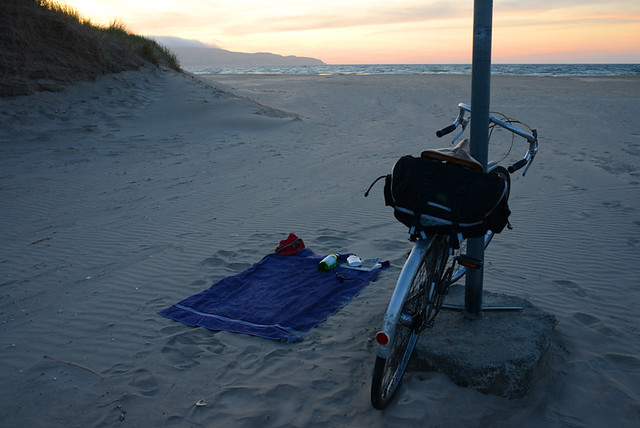
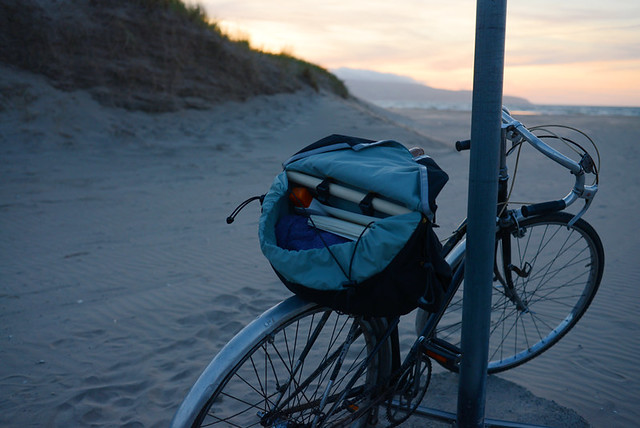
For years I've dreamt of combining two activities I love: riding my bike and swimming in the sea. Considering that Boston was right on the water, cycling to the beach proved a surprisingly elusive goal during my time there, with successful two-wheeled beach trips few and far between. But now that I live practically on the shore I am determined to make the most of it. 

But what are beaches like in Northern Ireland, you might ask with a suspicious shudder - picturing scenes of frigid waters and relentless winds, clusters of pallid holiday-makers in ponchos shivering on soggy sand as black clouds loom overhead. Well, in reality it isn't nearly that bad. For instance, when I first came here I was told it was too cold to swim without a wet suit. Foolishly, I believed this and didn't even try to go in the water at first. Then one hot day I walked in the waves and discovered the water was perfectly within the boundaries of what is considered swimmable in Northern New England! Not quite lukewarm, but not ice cold either - with a good half hour of swimming possible before cramping sets in and limbs begin turning blue. And to top it off, it is sunny nearly every day! Not for the entire day of course, but more like for an hour at a time in between bouts of fog and rain, but let's not be nitpicky here. Summer is here and the beach trips have commenced!

Beach Bike
Though technically I live right on the water, the nearest official beach - staffed with lifeguards and lacking in dangerous riptides (well, relatively speaking) - is 3.5 miles away. It's a pleasant ride that can be accomplished on almost any bicycle. The easiest is to ride my Brompton, with its bottomless pit of a front basket into which I can throw anything a beachgoer could desire, laptop and portable wifi unit included. But really any bike that will accommodate a large Carradice-style saddlebag will do, and sometimes a faster bike can be more fun. 

Cycling to the Beach
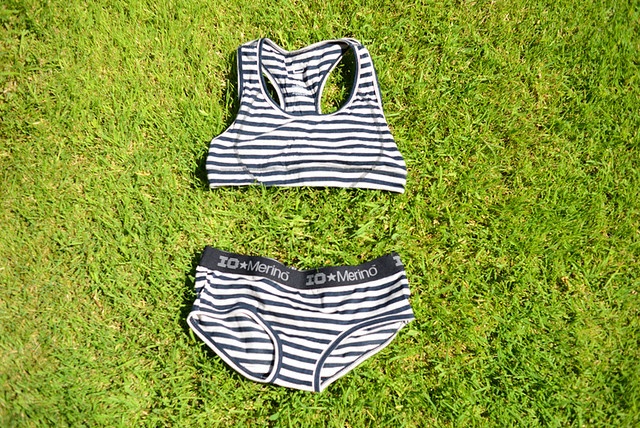
On the bike I wear my regular street clothes, with shoes that are easy to slip on and off and underwear that can pass for a swimsuit. Some time ago I discovered that wool underwear - both short and long - feels amazing to wear in the water, keeping me warmer than an ordinary swimsuit would. The wet wool also keeps me cozy once I get out of the water, and begins to dry relatively quickly. When I'm ready to leave, I just put my clothes back on over it and pedal home. Even if the wool is still damp, this feels surprisingly okay - nothing like cycling in a soggy synthetic swimsuit or wet cotton underwear. And being able to do this eliminates need to deal with the logistics of changing or transporting a soggy swimsuit by bike (though the latter is not especially complicated - just wring it out and use a plastic bag).

Cycling to the Beach
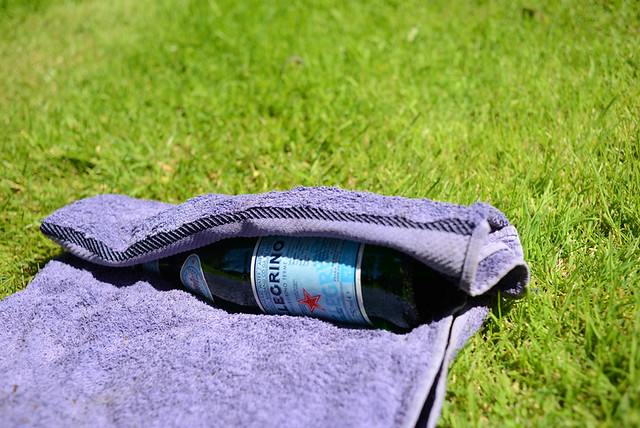
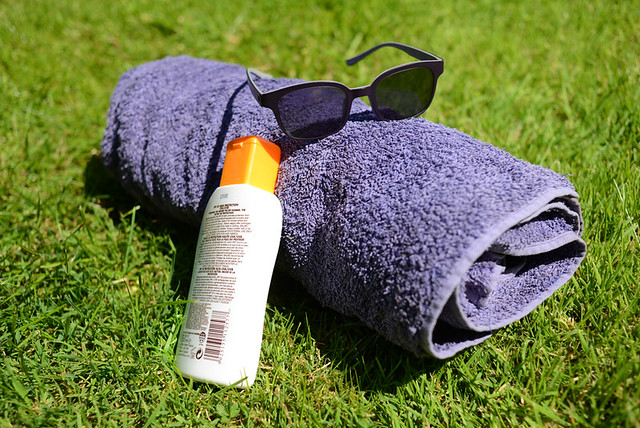
The rest of things I bring along, I will wrap in a towel - starting with the fragile stuff first, so that it's surrounded by the most padding. 

Cycling to the Beach
This makes for a neat bundle that can then simply be stuffed in a bike bag or basket, with everything held in place and not bouncing around too much. 

Beach Bike
And voila: Beach bag and beach bike. Heaven!

I've been to the beach plenty of times this summer already, and though it isn't quite warm enough to submerge myself fully yet (oh yes it is! finally swam after writing this post) I find just spending time there - reading, writing, photographing, living -  to be boundlessly enjoyable, and all the more so if I come and go by bike. There is something about cycling down a sunbaked road, in anticipation of smelling the salt, seeing the waves, and touching the sand with my bare feet, that makes for an out of this world experience. True, Ireland isn't exactly a tropical island. But something this good is best in measured doses, and worth getting rained on once and again… and again!

Jumat, 13 Juni 2014

Rand-O'Clock

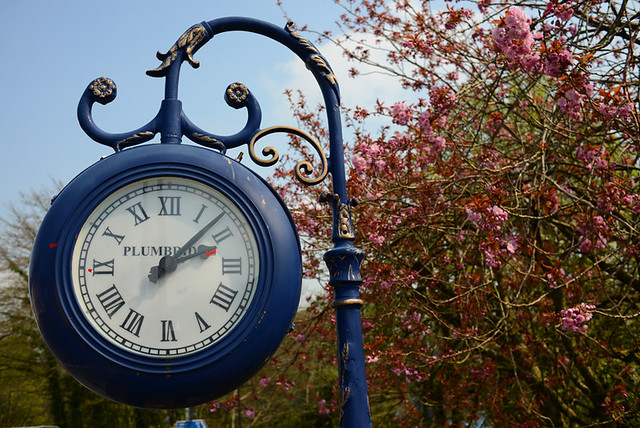
Plumbridge
A brevet is not a race. This is a thing that randonneurs are ever eager to remind us of, a fact that they repeat with conviction - particularly when enticing newcomers. And technically it is true. We are given a time limit to complete a brevet, and on the surface the time allotted seems plentiful: If we pace ourselves and make a reasonable effort, we can enjoy the scenery and the camaraderie, even grab a meal or two. But no matter how we spin it, a brevet is not a leisure ride and it's not a tour; it is not a free-form meander or a spontaneous frolic. It is a timed event that requires strict adherence to a route. The map is our indispensable guide. And the clock is our constant companion. 

Doing a ride on the clock is an altogether different experience from cycling that is not timed. On the clock, things have a way of coming into sharper focus. The present attains a simplicity and clarity; it becomes more concentrated. What's in front of us and inside us reveals itself in the finest of detail, the periphery fading away. We discover things about our bicycles and bodies that surprise us, even if we're far from novice cyclists. We gain new insights into our speed, strength, style of cycling, energy fluctuations, nutritional needs, even our moods and our character. 

Why does the presence of a timer, a self-imposed stressor, do these things to us on a bicycle ride? Because we're human. It is really no more complicated than that. And it's what makes randonneuring challenging, exciting, frustrating, fulfilling and addictive. 

I began this summer with a 300K brevet and will probably do a couple others, same distance or shorter, in the near future. But inherent to randonneuring is the pressure to "advance" to longer distances, making such a plan seem rather unambitious. What about a 400K? If I did a 300K out of the gate, surely I am ready to try the next distance.

Giving this some consideration, I thought again of my companion the clock. Based on the 300K and on self-timed rides I've done before it and after, I know that my overall average (not to be confused with rolling average) over long distances with significant climbs is around 10.5mph. That's above the roughly 9.5mph minimum required to complete a brevet. But it's not enough to relax and enjoy myself on these events. It also means that I spend way more time on the bike over a given distance than a speedier cyclist - creating more opportunities to develop fatigue, aches and pains, and various other problems - physical, mechanical, and logistical. 

Consider, for instance, cycling in the dark. A rider fit enough to complete a summertime 300K in sufficiently few hours to finish before dusk will not have to deal with the issue at all. A rider who is not, will face this extra challenge. Same goes for sleep deprivation on the longer distance brevets.

According to some seasoned randonneurs I've talked to lately, the 400K is a pivotal distance precisely for that reason. Compared to the shorter brevets, it is new territory. A make you or break you distance. A wild card. And much will depend on the rider's fitness, on how many hours those 250-odd miles will translate to.

Mary of Chasing Mailboxes describes a 400K she recently completed on tandem, in 20 hours. It's a number that made me want to cry and laugh simultaneously, reminding me of just how great the discrepancy between myself and most randonneurs I encounter truly is. Mary's performance means that, purely time-wise, her 400K experience was more like my 300K, which I completed in 18 hours 45 minutes. Can I handle a brevet where I'm on the bike 1 hour and 15 minutes longer than the longest time I've spent on the bike so far? Yes, I think I can. But realistically, a 400K is likely to take me 25 hours and I'm not sure my body and mind can handle all that time on the bike quite yet. I'd like to try a 400K some day, but I'd rather do it when I'm fit enough to complete it within a shorter timespan. 

When cyclists discuss their readiness to handle a particular brevet, I notice they tend to speak solely in terms of distance. But as I dip my toe deeper into the murky waters of randonneuring, I come to feel that thinking of it in terms of time makes at least as much sense. The clock is my constant companion,  and it does not let me forget.